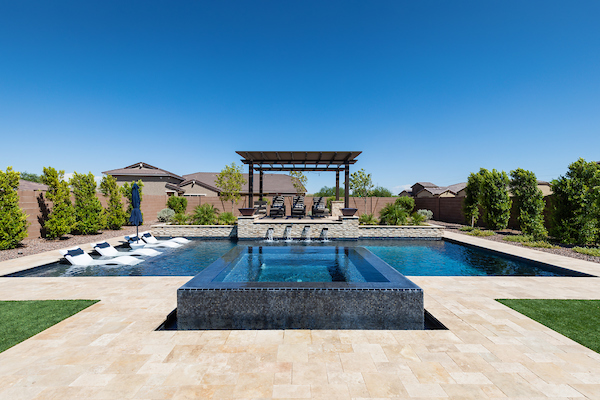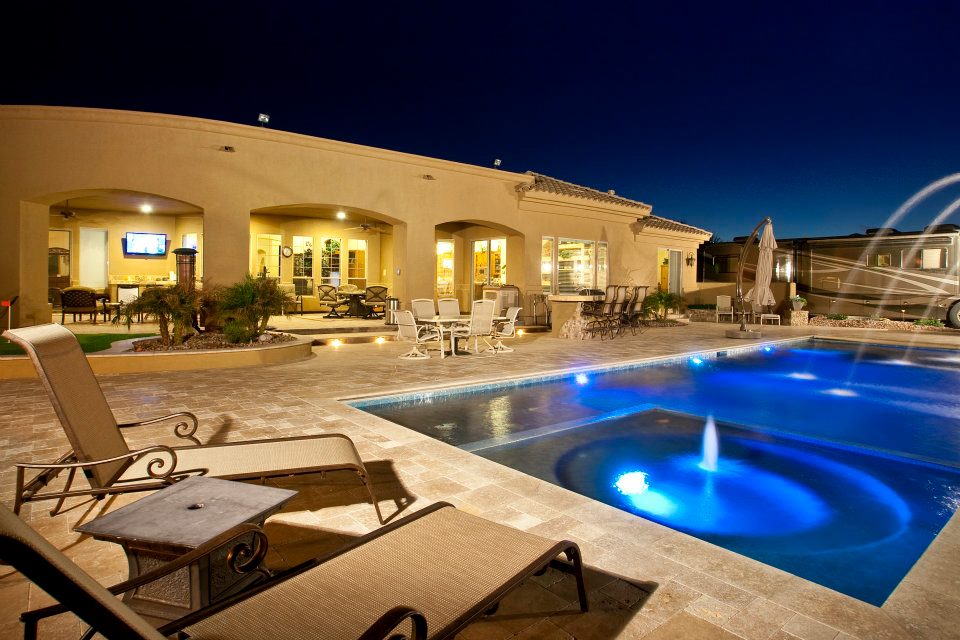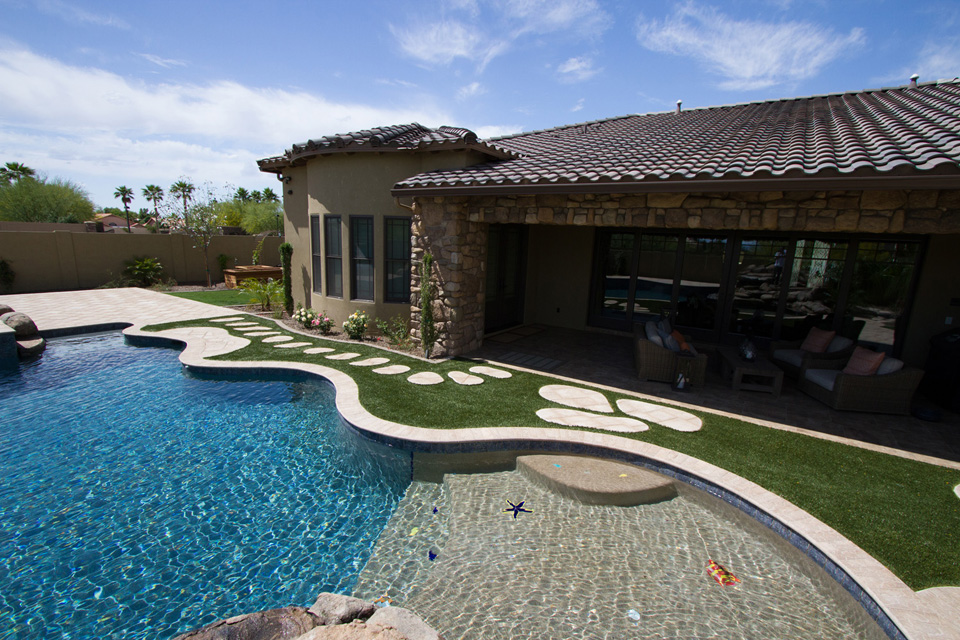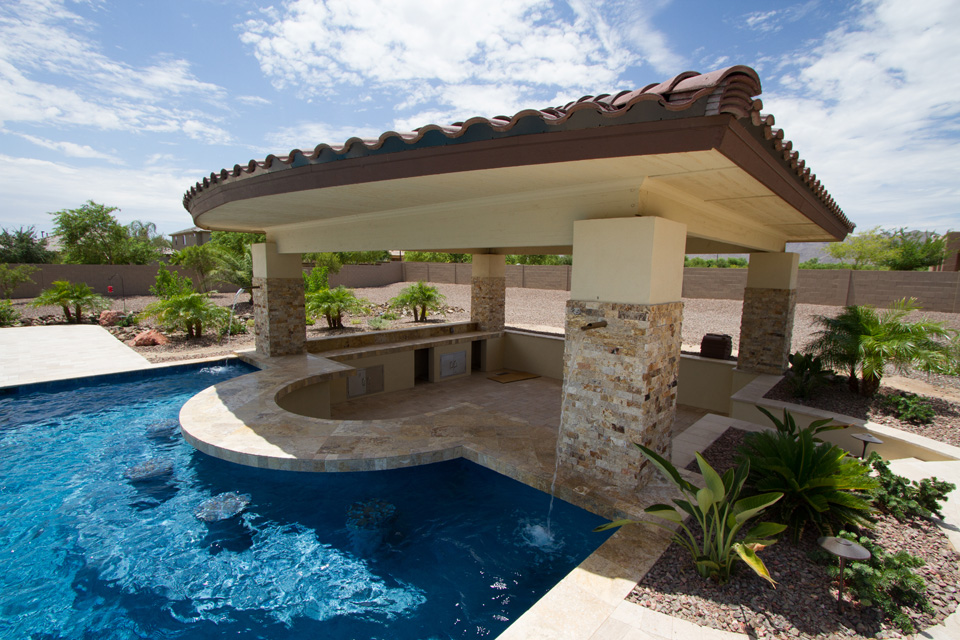
Living in Buckeye, AZ, means enjoying the beauty of the desert climate. However, designing a stunning desert landscape that thrives in this environment can be a challenge. A desert landscape designer can help you create an outdoor space that is not only beautiful but also sustainable and easy to maintain. At Palo Verde Pools & Outdoor Living, we specialize in transforming desert landscapes into vibrant, low-maintenance environments that enhance your home’s curb appeal.
Let’s explore practical tips for maximizing your desert landscape. Whether you’re looking to design a drought-tolerant garden or incorporate water features, we’ll show you how to make the most of your outdoor space with the help of a professional landscape designer in Buckeye.
Understanding Desert Landscaping
Desert landscaping is all about embracing the natural beauty of arid environments while minimizing water usage and maintenance. By selecting the right plants and materials, you can create an outdoor oasis that thrives in Buckeye’s hot, dry climate.
Unlike traditional gardens, which often rely on lush, water-hungry plants, desert landscapes focus on drought-resistant flora, efficient irrigation systems, and hardscaping features like stone pathways and gravel beds. A desert landscape designer can help you choose the best elements for your specific space, ensuring that your landscape is both functional and stunning.
Key Elements of a Desert Landscape
When working with a landscape designer in Buckeye, there are several key elements to consider to ensure your desert landscape design is both beautiful and functional. Here are a few of the most important features:
1. Drought-Tolerant Plants
Choosing the right plants is crucial for creating a sustainable desert landscape. Native desert plants, such as succulents, cacti, and agave, are well-suited for Buckeye’s dry climate. These plants require minimal water and are highly resistant to heat and drought.
- Agave: Agave plants are iconic in desert landscapes, offering striking shapes and textures. They require very little water and thrive in full sun.
- Cactus: Various types of cactus, such as saguaro and prickly pear, make excellent focal points in your garden, offering unique shapes and vibrant flowers.
- Succulents: These plants are perfect for ground cover, creating a lush, green appearance without needing much water.
Incorporating a mix of these low-maintenance plants can help you create a beautiful, sustainable landscape that thrives in the desert environment.
2. Efficient Irrigation Systems
A well-designed irrigation system is essential for maintaining a healthy desert landscape. While desert plants require minimal watering, they still need a consistent water supply during the hotter months. A drip irrigation system is ideal for desert landscaping, as it delivers water directly to the plant’s root zone, minimizing water waste.
Additionally, installing a smart irrigation system can help you schedule watering times based on weather conditions, ensuring that your plants receive the right amount of water without over-watering or wasting resources.
3. Hardscaping Features
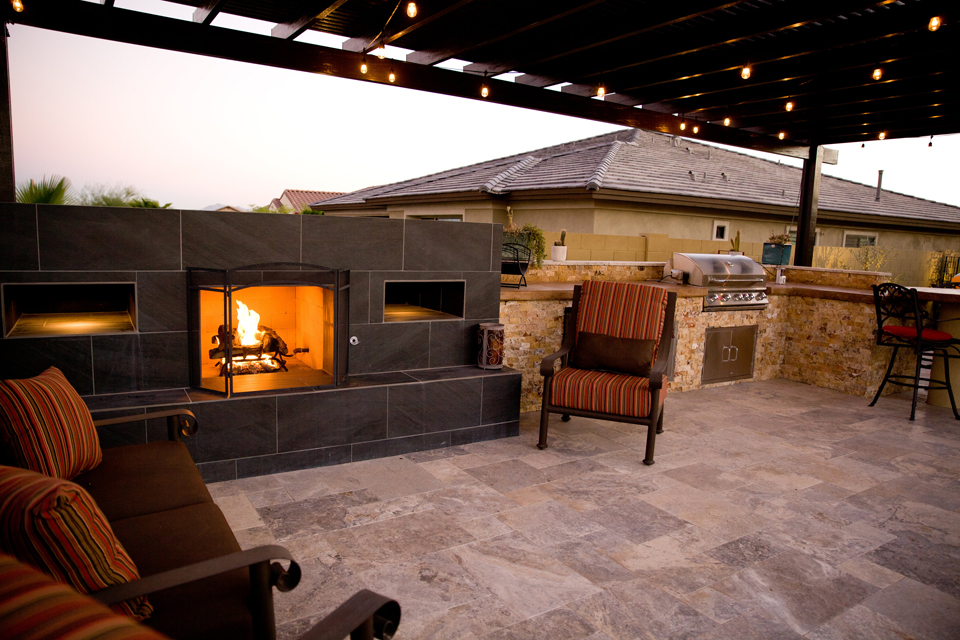
Incorporating hardscaping elements like pathways, patios, and retaining walls not only enhances the aesthetics of your desert landscape but also reduces the amount of plant maintenance required. Hardscaping materials like flagstone, gravel, and pavers blend seamlessly into the natural desert environment, providing texture and contrast.
- Stone Pathways: Create winding stone pathways that lead through your garden, offering a sense of movement and guiding visitors through your outdoor space.
- Gravel Beds: Gravel is a versatile, low-maintenance material perfect for creating visually interesting ground cover and reducing water usage.
- Retaining Walls: Retaining walls can help create tiered garden beds, adding dimension to your landscape and helping to prevent erosion during storms.
4. Water Features
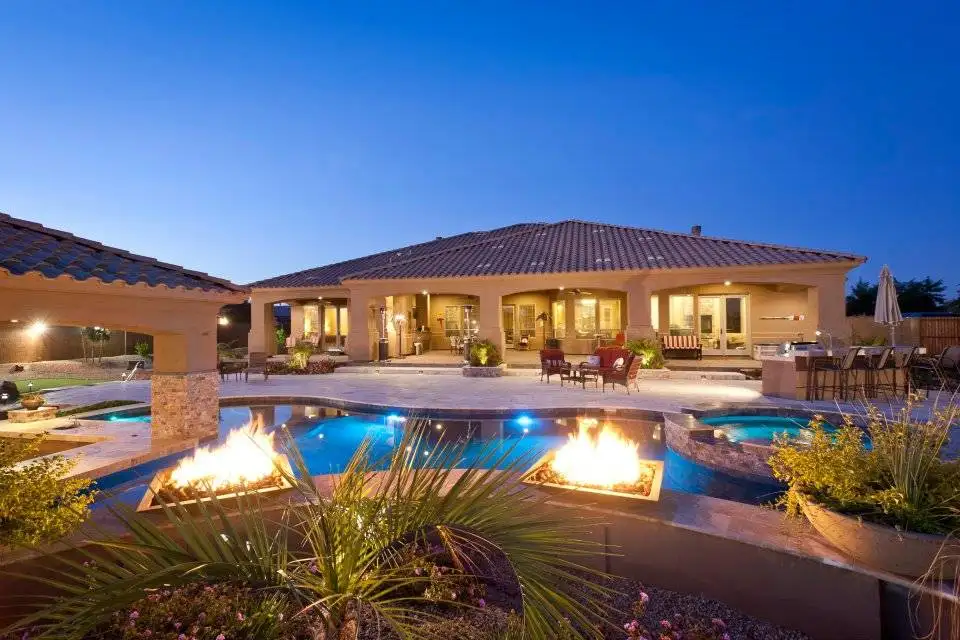
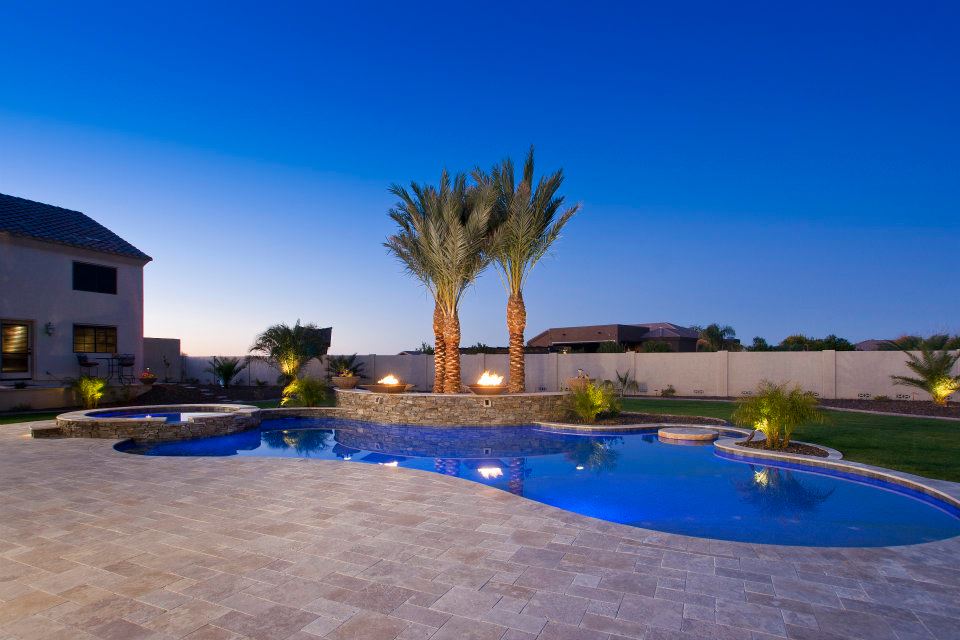
Adding a water feature to your desert landscape is a great way to introduce a sense of tranquility and luxury to your outdoor space. While water features can be more water-intensive, there are several ways to design them efficiently for desert landscapes.
- Recirculating Fountains: A small, recirculating water fountain is a perfect addition to a desert garden. These fountains recycle the same water, reducing waste while adding the soothing sound of running water.
- Pondless Waterfalls: If you want the look of a waterfall without the water consumption of a pond, a pondless waterfall is a great option. It uses a recirculating system to keep water flowing while avoiding standing water that attracts pests.
By choosing water features that use recirculated water or are designed to minimize water use, you can enjoy the beauty of water in your desert landscape without compromising sustainability.
5. Outdoor Lighting
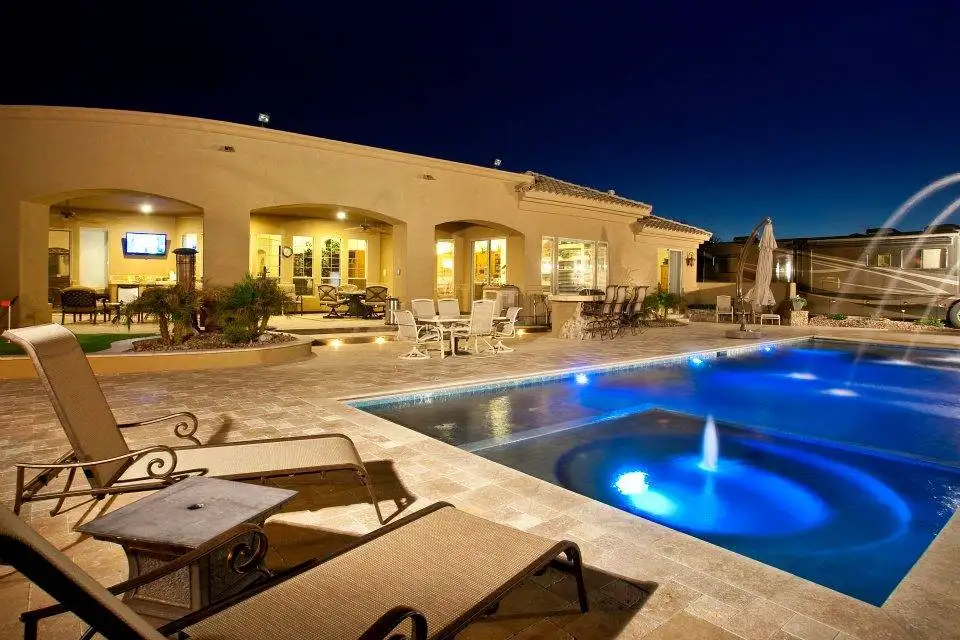
Outdoor lighting not only enhances the beauty of your desert landscape but also makes your backyard usable after the sun sets. Lighting can highlight key features like cacti, water features, or pathways, adding drama and ambiance to your outdoor space.
Consider using LED lights to illuminate walkways or spotlights to highlight your favorite plants. With the right lighting design, you can create a magical atmosphere that makes your desert landscape feel inviting both day and night.
Getting Started with Your Desert Landscape Design
If you’re ready to transform your backyard with a custom desert landscape in Buckeye, it’s time to work with an experienced landscape designer. At Palo Verde Pools & Outdoor Living, our team specializes in creating beautiful, sustainable desert landscapes that reflect your style and the natural beauty of the desert.
Contact us today to schedule a consultation, and let us help you design the perfect desert landscape for your home.