
Getting HOA Approval for a Pool in the West Valley: What to Expect
If you live in an HOA community in Arizona’s West Valley, you’ll typically need HOA approval for a custom pool before construction begins. Most homeowners submit their applications through their association’s online portal, while Palo Verde Pools & Outdoor Living prepares the plans and supporting materials needed for the submission.
The process is usually straightforward when you understand your community’s requirements ahead of time.
Here’s what West Valley homeowners in Goodyear, Verrado, Estrella Mountain Ranch, and surrounding communities should know before getting started.
Do I Need HOA Approval to Build a Pool?
If your neighborhood has a homeowners association, you’ll generally need its approval before building a pool or making other significant backyard improvements.
HOA approval is separate from city or county permitting.
Your association may have architectural guidelines that affect the pool’s location, surrounding structures, setbacks, materials, and other visible elements.
These requirements can influence the design before construction ever begins.
That’s why we consider community guidelines while developing your Custom Pool, rather than treating HOA approval as an afterthought.
What Does an HOA Usually Need to Approve a Pool?
Most HOA applications require an online form, a few pictures, and the construction plan. The exact requirements depend on your community and the scope of your backyard project.
Your construction plan helps the association understand what you’re proposing and where the improvements will be located.
Depending on the HOA, reviewers may look at:
- Pool placement and property setbacks
- Drainage considerations
- Equipment location
- Fencing and barriers
- Decking and finish materials
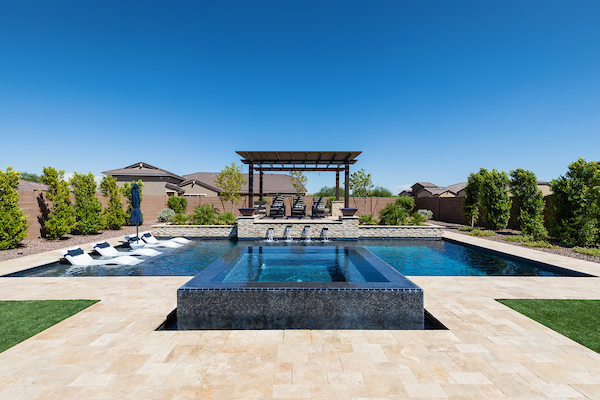
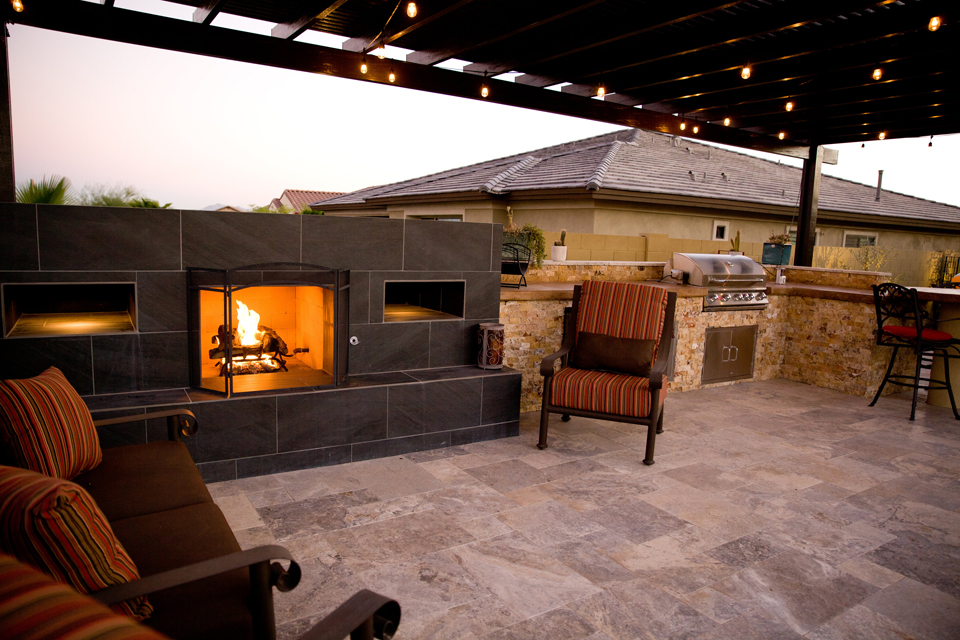
- Pergolas, ramadas, and other outdoor structures
A complete backyard design may involve additional review compared with a pool-only project.
Palo Verde prepares the construction plans and supporting materials needed for your submission, helping you approach the process with the right information.
How Long Does HOA Approval for a Pool Take?
Most HOAs respond within approximately 30 days, although every association has its own review process and timeline.
Some applications move more quickly, while others require additional information or design adjustments.
This is why HOA approval should be considered during the early planning stages.
Submitting complete information and accounting for known community guidelines can help reduce unnecessary revisions.
While we can’t control an association’s review schedule, we can help you prepare a design that takes its requirements into consideration.
What’s the Difference Between HOA Approval and a City Pool Permit?
HOA approval addresses your community’s architectural guidelines, while city or county permits address applicable construction and safety requirements. Most pool projects in HOA communities require both.
For example, your HOA may review the placement of a pergola or the materials used around the pool.
Your municipality reviews the project under applicable building requirements and conducts inspections during construction.
Depending on the jurisdiction, a pool project may involve up to four inspection checkpoints:
- Layout inspection: Required by some municipalities before excavation proceeds.
- Pre-shotcrete inspection: Conducted after excavation, plumbing, rebar, and electrical work, before the structural shell is installed.
- Pre-plaster inspection: Completed before the Pebble interior finish is applied.
- Final inspection: Conducted when the project is complete, including final electrical work.
Not every jurisdiction requires all four, and inspection procedures can vary.
For a closer look at what happens after approvals are complete, read our guide to [How a Custom Pool Gets Built in the West Valley, Phase by Phase](INSERT POST 1 URL).
Why Do HOA Pool Plans Get Sent Back?
HOA plans are commonly returned when a proposed improvement doesn’t meet a community-specific requirement or the association needs additional information.
Outdoor structures and setback requirements are particularly important to consider.
For example, in Estrella Mountain Ranch, pergola requirements can differ based on the structure’s design.
A slatted pergola may be permitted five feet from a fence, while a solid structure may require ten feet of separation.
On smaller lots, that difference can significantly affect the layout.
A homeowner might envision a shaded seating area in a particular location, only to discover that the design needs to change to meet the guidelines.
We prefer to identify those considerations early.
By learning the applicable community requirements before submitting plans, we can help reduce revisions and create a design that works for your property.
Who Submits the Pool Plans to the HOA?
In most cases, homeowners submit their own HOA applications through an online account, while Palo Verde prepares the construction plans and supporting materials.
Every association operates differently, so the exact submission process may vary.
Some communities have straightforward online forms. Others require additional documentation or more detailed architectural review.
Our role is to help you understand what’s needed and provide the project information for your submission.
If your HOA requests changes, we can help review the feedback and make appropriate adjustments to the design.
Does the HOA Review the Entire Backyard or Just the Pool?
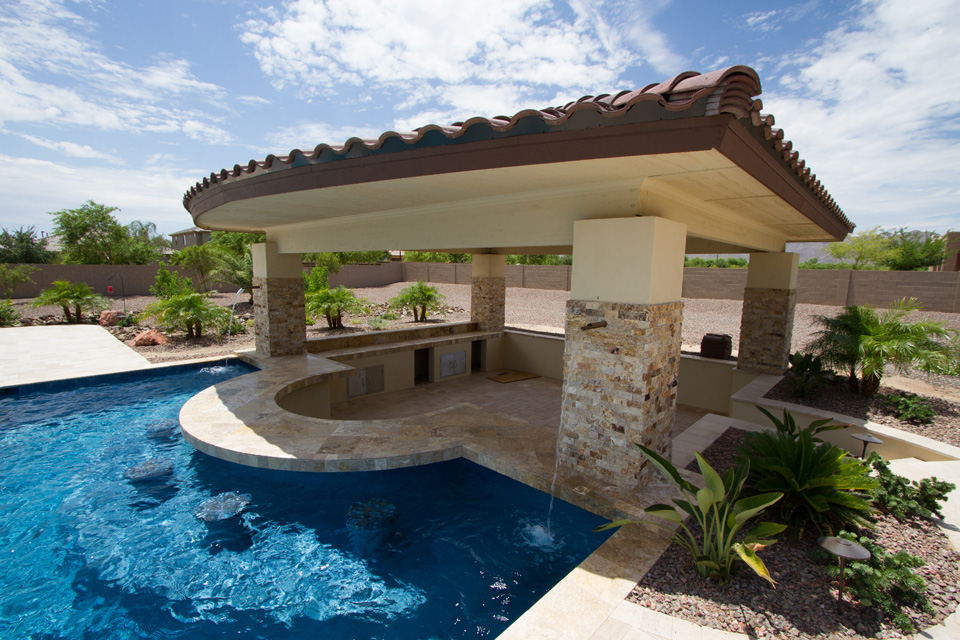
An HOA may review permanent outdoor improvements beyond the swimming pool, including pergolas, ramadas, outdoor kitchens, and other structures.
This is especially important when you’re creating a complete outdoor living environment.
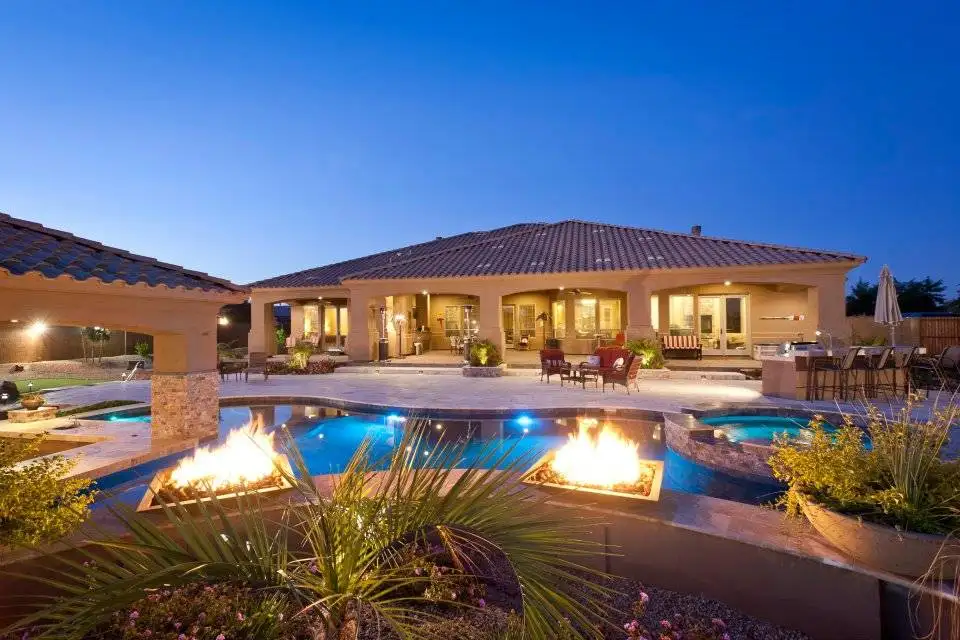
A shaded gathering area, outdoor kitchen, fire feature, or new hardscaping may all be part of your overall design.
Each element needs to work with your property and the applicable community requirements.
Palo Verde offers Landscape Design as part of our approach to complete outdoor living.
Considering the entire backyard early helps create a more cohesive design and reduces the chance of discovering conflicts later.
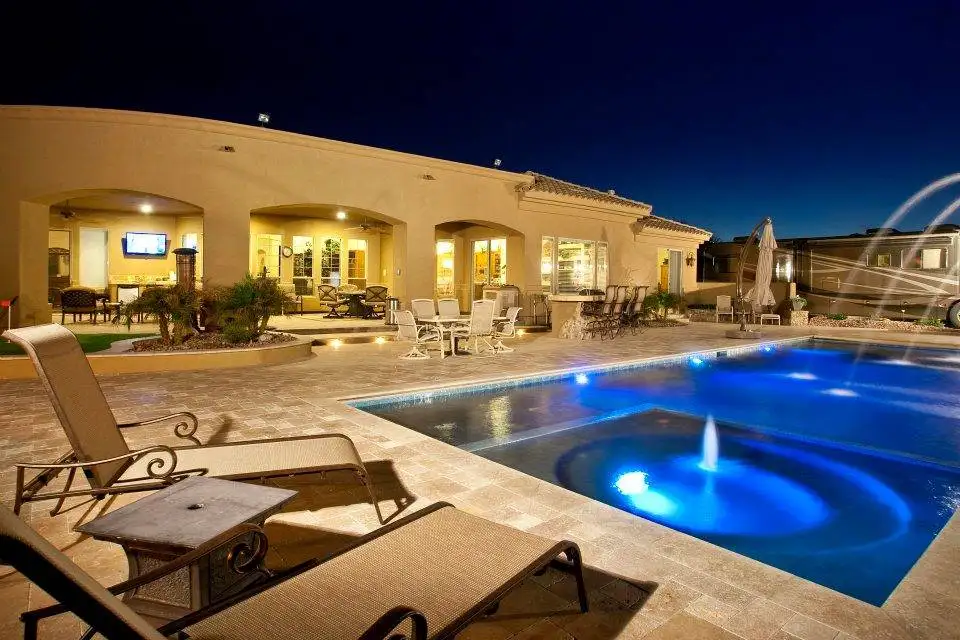
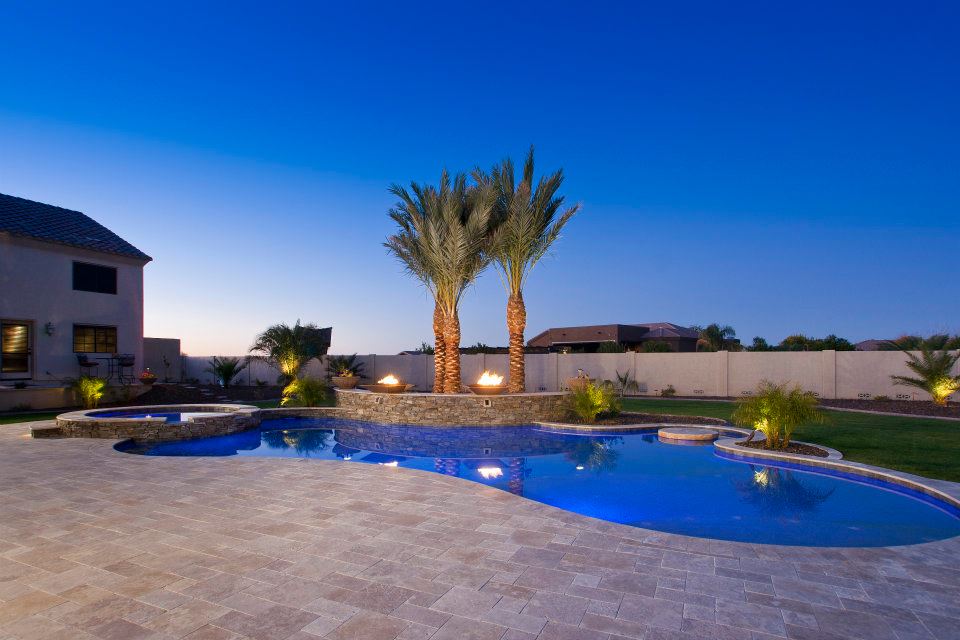
You can also explore our portfolio to see how pools and outdoor living spaces come together in completed projects.
What Should Homeowners Know About HOA Approval in Verrado, Victory, Estrella, and PebbleCreek?
Verrado, Victory at Verrado, Estrella Mountain Ranch, and PebbleCreek are among the West Valley communities where homeowners may encounter specific architectural review requirements.
Each community has its own guidelines, and those requirements can affect different parts of a backyard project.
Palo Verde regularly works in Verrado, Victory at Verrado, and Estrella Mountain Ranch, giving our team familiarity with the design considerations homeowners encounter in these neighborhoods.
PebbleCreek in Goodyear is another community where homeowners should plan for a detailed architectural review before moving forward with a pool project.
The important thing to understand is that there isn’t one universal set of West Valley HOA rules.
Requirements for setbacks, structures, and visible improvements can differ between neighborhoods, even when they’re located close to one another.
Guidelines can also change, so it’s important to confirm the current requirements for your specific property.
Our goal is to create a backyard you love while accounting for the community standards that apply to your home.
Who Handles Pool Barriers and Fencing Requirements?
Palo Verde handles required pool barriers and fencing as part of the project, so homeowners don’t have to coordinate those elements separately.
Pool safety requirements are an important part of designing and permitting a new pool.
They can also affect how your backyard looks and functions.
We consider these requirements during planning so barriers and fencing can be incorporated into the overall design rather than added as an afterthought.
The exact requirements depend on your property and applicable regulations.
How Can I Make the HOA Approval Process Easier?
The best way to simplify HOA approval is to understand your community’s requirements before finalizing and submitting your backyard design.
Complete plans and early attention to setbacks, structures, and other guidelines can help reduce unnecessary revisions.
You don’t need to become an expert on architectural review requirements to start planning a pool.
That’s part of what we’re here to help with.
At Palo Verde, we prepare the plans and supporting materials for your HOA submission, consider known community requirements during design, and help you work through requested changes when necessary.
We want the process to feel organized and approachable, so you can spend more time thinking about the backyard you’re creating.
Thinking About a Pool in Your HOA Community?
If you’re considering a custom pool in Goodyear or another West Valley community, we’d be happy to talk through your property, your ideas, and what to consider before getting started.
Start with a conversation and let’s explore what’s possible for your backyard.
Frequently Asked Questions
Can I Start Digging My Pool Before HOA Approval?
No. You should wait until the required HOA approval and applicable city or county permits are in place before construction begins. Starting early can create problems if changes are required.
What Happens If My HOA Asks for Changes?
Palo Verde can help review the requested changes and adjust the design where necessary. Considering known community guidelines early can help reduce the likelihood of revisions.
What If My HOA Doesn’t Have an Online Submission Portal?
Contact your HOA or community management company to confirm its submission process. Palo Verde can prepare the construction plans and supporting materials needed for your application.
Does My HOA Need to Approve an Outdoor Kitchen or Ramada?
It may. Many HOAs review permanent outdoor structures, including pergolas, ramadas, and outdoor kitchens. Requirements vary by community.
Can HOA Approval and City Permitting Happen at the Same Time?
Depending on the HOA and municipality, parts of the approval and permitting processes may overlap. However, both required approvals must be in place before construction begins.